


 " />
" /> " />
" /> " />
" /> " />
" /> " />
" />| Recent Featured Videos and Articles | Eastern “Orthodoxy” Refuted | How To Avoid Sin | The Antichrist Identified! | What Fake Christians Get Wrong About Ephesians | Why So Many Can't Believe | “Magicians” Prove A Spiritual World Exists | Amazing Evidence For God | News Links |
| Vatican II “Catholic” Church Exposed | Steps To Convert | Outside The Church There Is No Salvation | E-Exchanges | The Holy Rosary | Padre Pio | Traditional Catholic Issues And Groups | Help Save Souls: Donate |  |
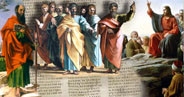



The King James Translation And John 3:36
Here’s what the Greek which St. John actually wrote says:
Notice that St. John uses a participle of the verb πιστεύω in the first part of the verse, which says “he who believes” or “the one believing” (ὁ πιστεύων). However, in the second half of the verse, which is translated in our video as “he who disobeys” or “the one disobeying”, St. John uses a participle of a different verb. He uses “ὁ δε ἀπειθῶν”. ἀπειθῶν is a participle of ἀπειθέω.
ἀπειθέω is primarily defined as to refuse to obey, be uncompliant, disloyal, etc. In fact, in the King James Version, that verb ἀπειθέω is translated as ‘disobey’ or ‘disobedient’ in the following verses: Romans 2:8; Romans 10:21; 1 Peter 2:8; 1 Peter 3:1; 1 Peter 3:20; and 1 Peter 4:17.
If St. John had intended to repeat the exact same thought of believing in both parts of the verse, then he could have contrasted ὁ πιστεύων (the one believing) with ὁ ἀπιστέων (the one not believing). But he uses a different verb, ἀπειθέω, in the second half of the verse. This emphasizes that one must comply with and obey Jesus to be saved – a truth taught throughout the New Testament (Hebrews 5:9, etc.). So, the question is, what carries more authority: the words that St. John actually wrote or the words of Anglicans in 17th century England? For a Christian, the answer is obvious. It’s the former. But to a King James Only cultist, the answer is the latter. You should watch this video. It has a section refuting and exposing the absurd position of King James Onlyism.
Sign up for our free e-mail list to see future vaticancatholic.com videos and articles.
Recent Content
^