


 " />
" /> " />
" /> " />
" /> " />
" /> " />
" />| Recent Featured Videos and Articles | Eastern “Orthodoxy” Refuted | How To Avoid Sin | The Antichrist Identified! | What Fake Christians Get Wrong About Ephesians | Why So Many Can't Believe | “Magicians” Prove A Spiritual World Exists | Amazing Evidence For God | News Links |
| Vatican II “Catholic” Church Exposed | Steps To Convert | Outside The Church There Is No Salvation | E-Exchanges | The Holy Rosary | Padre Pio | Traditional Catholic Issues And Groups | Help Save Souls: Donate |  |
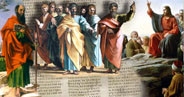



St. Gregory The Great: All Unbelievers & People Outside The Sacraments Are Lost
In this passage from his work Moralia (on the Book of Job), Pope St. Gregory the Great teaches that all who die as unbelievers and without the sacraments of the Church are not saved. Like other saints who address this matter, as part of his exposition he cites John 3 about how one who does not believe is already condemned.
Pope St. Gregory the Great, Moralia, Book 26, Chap. 27 (#50): “Of whom the Prophet says, The ungodly do not rise again in the judgment. [Ps. 1:5] And of whom the Lord declares, But he who does not believe is already condemned. [John 3:18] And of whom Paul says, They who have sinned without the Law, shall perish without the Law. [Rom. 2:12] Therefore even all unbelievers rise again, but to torment and not to judgment. For their case is not then examined; because they come into the presence of their strict Judge, with the condemnation already of their own unbelief. But those, who retain their profession of faith, but have not works in accordance with it, are convicted of sin, in order to their perishing. But they, who have not enjoyed even the sacraments of the faith, do not hear the reproof of the Judge at the last ordeal; for, condemned already by the darkness of their own unbelief, they do not deserve to be condemned by the open reproof of Him, Whom they had despised. Those hear at least the words of the Judge, because they have retained at least the words of His faith. These hear not in their condemnation the sentence of the eternal Judge: because they would not retain their reverence for Him even in words. Those perish by the Law, because they have sinned under the Law; whilst no mention of the Law is made to these, in their condemnation; because they made no effort to have anything of the Law. For a prince, who administers an earthly commonwealth, punishes in different ways a citizen, who offends at home, and an enemy who makes war abroad. In the first case, he considers his rights, and condemns him in language of just reproof. But against an enemy he wages war: he wields instruments of destruction, and inflicts the tortures his wickedness deserves. But he does not enquire what the law provides for his offence. For it is not necessary for him to be destroyed by Law, who could never be held by the Law. Thus, therefore, in the last judgment, both a lawful reproof smites him down, who has departed in his conduct from that which he held in profession; and he is destroyed without a judicial sentence, who is not held by the law of faith.”
Sign up for our free e-mail list to see future vaticancatholic.com videos and articles.
Recent Content
^